How to Dispose of Brick After Demolition
Brick left after a wall, chimney, or patio teardown is heavy. Knowing how to dispose of brick starts with keeping it out of the wood, drywall, and household trash. Sort it first. Keep whole pieces that can be reused. Keep clean broken brick and block for a recycling or heavy-material route. Keep mixed debris out of that pile. If the load is mostly brick, concrete, dirt, rock, or block, start with Get Gawn's concrete dumpster options before you book a general cleanout box.
Call (425) 620-6513 to request a brick disposal quote
Get Gawn is a locally owned roll-off rental based in Ravensdale. The team delivers a 7-yard Rock and Dirt Box, a 15-yard dumpster, and a 22-yard dumpster. Service covers King County and Pierce County, including Tacoma and Fife. You reach people who know the job, the site, and the driver. If an automated greeting picks up while the team is with another customer, they call you back.
How to dispose of brick starts with a sort
Do not treat a demolished wall as one kind of waste. A single chimney or garden wall can produce four different piles, and each pile has a different next step.
- Whole brick. Sound faces and intact corners can be reused for a repair, a garden edge, or a walkway. Stack these away from the work area so they are not crushed.
- Broken brick, block, and mortar. This is the heavy pile. It belongs with concrete, dirt, rock, and asphalt, not with lumber or drywall.
- Wood, metal, cardboard, and drywall. These are a different load. King County asks self-haulers to separate clean wood, cardboard, and scrap metal where recycling is available.
- Anything you cannot name. Painted material, old mortar you did not mix, or brick with an odd coating should stay out of the clean pile until someone confirms it.
A short note on the quote request helps more than a guess at the number of bricks. Say whether the pile is whole brick, broken brick, brick with mortar, or a mixed teardown. Add the city and a photo of the driveway or alley where a box would sit.
Reuse whole brick before you haul it
Whole brick is often worth more as material than as a disposal load. A homeowner replacing one section of a chimney, a garden wall, or a set of steps can set the good pieces aside for the repair. A contractor can ask the property owner whether they want the brick back before the first course comes down.
Reuse works when the brick is separated and reasonably clean. Knock off loose dirt. Do not spend a day chiseling every bit of ordinary mortar unless the person taking the brick asks for that. Photograph the stack and count the courses if you can. Ask a local masonry supplier or reuse group what they want before you load a truck.
Keep the reusable stack off the driveway you need for delivery. Get Gawn places boards under the container to protect the surface. A pile of brick in the only flat spot still blocks the drop. If the approach is an alley, a parking garage, behind a building, or a dead-end driveway, describe it when you call. The 7-yard, 15-yard, and 22-yard boxes can fit some of those sites. That is a possibility to confirm, not a promise.
What King County expects for brick
If the job is in King County, brick is not ordinary garbage. King County lists bricks, along with concrete and asphalt paving, among construction and demolition materials that are readily recyclable and banned from the landfill. The county's construction and demolition materials page also calls masonry a construction and demolition material. Loads in vehicles with mechanized dump beds are not accepted at county transfer stations.
That rule is why a pickup of loose bricks is a different trip from a roll-off full of a chimney. Self-haul loads that a county station will take still have size limits. Bulky pieces such as concrete blocks must stay under 2 feet on each side. They must also weigh under 200 pounds. A wall's worth of brick will not meet a casual "I'll swing by the transfer station" plan.
Separated brick is the better recycling load. King County says source-separated construction material costs less to handle than a mixed load. Mixed recyclables also recover less, because some of the mix is thrown away. The U.S. Environmental Protection Agency makes the same point in its construction and demolition materials guidance. Plan reuse and recycling before the debris becomes one pile.
Pierce County jobs still need a confirmed receiver. Do not assume a King County station, a private yard, or a Get Gawn box all follow the same list. Call the place that will take the material and describe the brick before you load it.
Prepare the brick before it goes in a container
Split the heavy pile from the cleanout pile
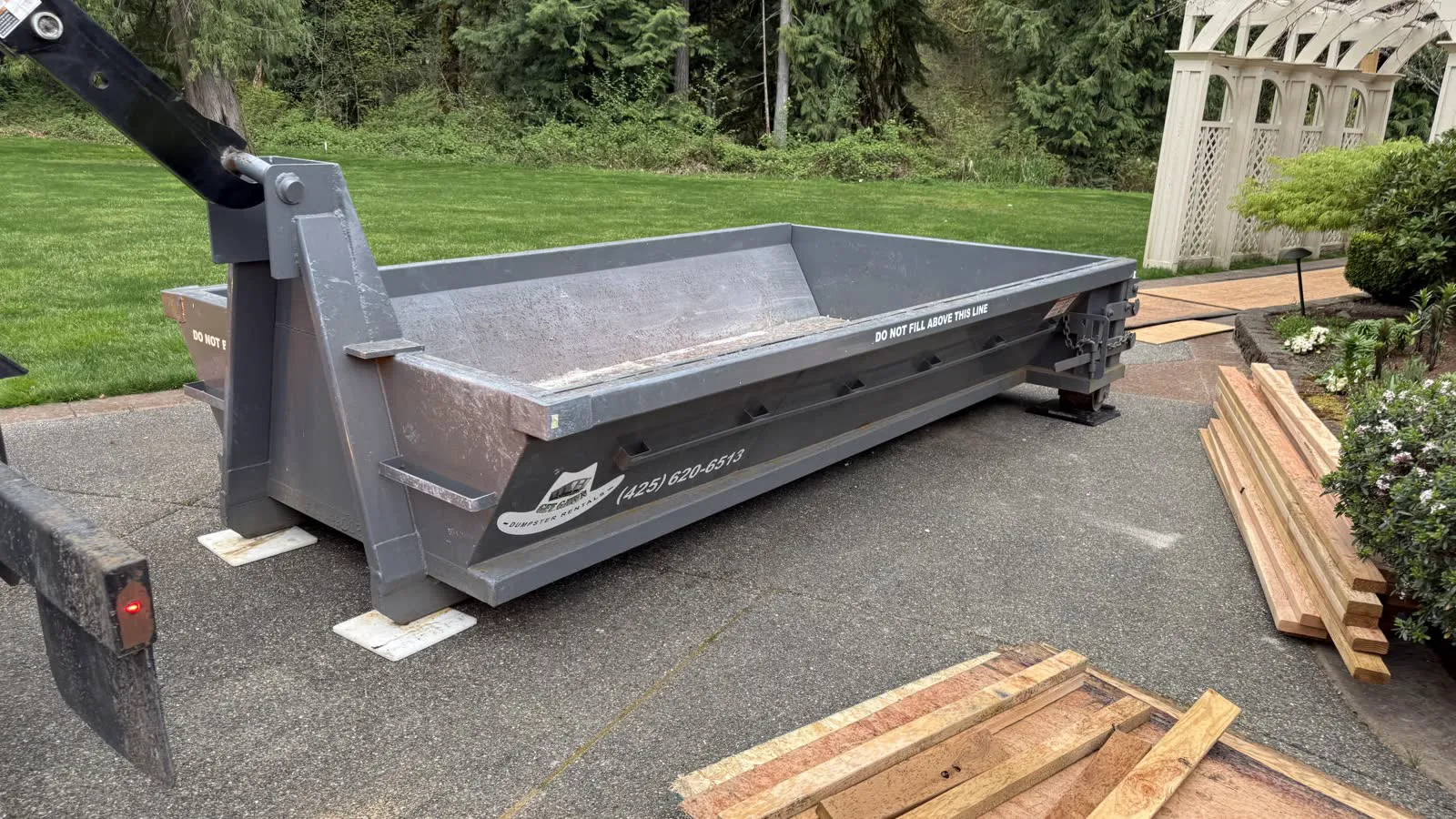
Brick and block belong in Get Gawn's 7-yard Rock and Dirt Box. So do mortar, concrete, dirt, rock, gravel, asphalt, and stripped sod. The live page asks that those loads stay free of trash, wood, drywall, metal fixtures, and mixed household debris. A mixed load is priced differently from a clean heavy load.
If the demolition also produces cabinets, flooring, or a kitchen's worth of ordinary debris, that material is a 15-yard or 22-yard conversation. Those two sizes are the ones most customers book for remodels and cleanouts. They are for general non-hazardous debris, loaded by hand. They are not a place to hide a chimney.
Break the pieces down to a size you can lift
Hand loading is the approved method. Do not plan on a machine dropping brick into the box. Break large chunks of a chimney or a concrete-block pier into pieces one person can lift. Set them down. Do not throw them from a ladder. Spreading the brick along the floor keeps the weight from sitting in one corner.
Stop at the fill line painted on the container. A lowboy looks roomy because the sides are low, which is exactly why people overfill it. The low sides are there so a wheelbarrow can reach the floor. They are not an invitation to stack brick above the rail.
Tell Get Gawn what changed
Demolition plans change. A "brick veneer only" job becomes a full wall with wood studs, or a patio job turns up a concrete slab underneath. Stop and call before that new material goes in the box. Same-day and next-day pickup is available when the schedule allows. An exchange stays a phone call so the crew can keep the site moving. Pickup is not automatic just because the box looks full.
Which container fits when you dispose of brick
Use this as a starting point, then confirm the load. The 7-yard box is the heavy-material container. The 15-yard and 22-yard dumpsters are for the rest of a remodel once the brick is separated.
| What you have | Where to start | How Get Gawn treats it | Confirm before booking |
|---|---|---|---|
| Brick, block, mortar, concrete, dirt, rock, or sod. | 7-yard Rock and Dirt Box | Heavy material. Priced by the yard on the live page. Low sides for hand loading. | Clean load. No trash or wood mixed in. A place the truck can set it. |
| Brick set aside, plus a bathroom, kitchen, or deck cleanout. | 15-yard dumpster | General non-hazardous debris. 14 feet long. 5-foot sides on the current size card. | The brick stayed in the Rock and Dirt Box. |
| A large remodel after the masonry is gone. | 22-yard dumpster | More room for a major remodel. 16 feet long. 6-foot sides. | Hand loading only. No hazardous waste. |
Do not pick the bigger box just to make the brick "fit." A taller container is harder to hand load with dense masonry. Mixing brick with trash can move the load off the heavy-material rate. If you also have clean soil from the same job, the dirt and sod guide covers that pile. It is a different question from brick.
Current public terms on the product pages: the 7-yard rental is $300, listed as $150 delivery and $150 pickup. The 15-yard is $430 and the 22-yard is $450. Rental is seven days, then $25 per extra day. Fuel is $35 per pickup and $35 per drop-off, not one fee for the round trip. Heavy debris such as dirt, rock, and concrete is priced per yard. Weight on the general boxes is $280 per ton with a one-ton minimum. The 7-yard page also lists its own per-yard rates for clean concrete, concrete with rebar, and sod and brick. Read the page for the size you book, because those figures are not interchangeable. Call for a monthly rate if the job will run longer than a week.
A simple order for demolition day
Brick disposal goes faster when the sort is set up before the first brick comes loose. This is the order that keeps a King County or Pierce County teardown from turning into one contaminated pile.
- Photograph the wall and the placement spot. One photo of the brick and one of the driveway, alley, or pad is enough for a quote.
- Mark three areas. Whole brick, broken masonry, and everything else. A tarp under the broken pile is enough.
- Protect the driveway. Get Gawn sets the box on boards. Clear cars, toys, and the reusable brick stack so the driver has a straight approach.
- Hand load the heavy box with masonry only. Set pieces in. Do not throw them in from above, and do not add lumber "just to finish the pile."
- Call if the material changes. A different mix needs a different answer before pickup. Use the contact page or call the same number you used to book.
If the rest of the job is a remodel, use the construction dumpster rental guide for the general debris. The dumpster size guide helps with that box too. Neither guide replaces the heavy-material decision for the brick itself.
What changes the price of a brick haul
The brick itself is only part of the quote. The rest is how clean the pile is and how far the truck drives. Time on site matters too. So does whether the load matches what you described.
- Material mix. Clean brick and block follow the heavy-material path. Wood, drywall, or trash in the same box changes the handling.
- Amount. A low, wide 7-yard box holds less volume than a 15-yard or 22-yard box. That is the point. Heavy material hits a weight limit long before a tall box looks full.
- Time on site. Seven days is the included rental. Extra days are $25 each. A demolition that slips a week should be booked with that in mind.
- Two trips, two fuel charges. Delivery and pickup are separate moves, and the fuel surcharge applies to each.
- Site access. A box that has to be set on the street, or that needs a tighter approach, should be described before the driver arrives. Get Gawn will say if the spot works.
The applicable rates and additional charges are listed on the product page for the size you book. The way to stay on those terms is to describe the brick honestly. "About one chimney. Broken down, no wood in the box" is a better note than "construction debris."
Service is local. King County and Pierce County are the consistent service area, and the service area page lists the cities, including Federal Way, Maple Valley, and Ravensdale. If a request is outside that area, Get Gawn still wants the call. The team will price the extra distance rather than guess from a form.
Common mistakes that ruin a brick load
Most brick-disposal problems are sorting problems, not container problems. These are the ones that show up after the wall is already down.
Filling a general dumpster with the chimney. The 15-yard and 22-yard boxes are for hand-loaded bathroom, kitchen, deck, flooring, roofing, and other ordinary debris. A brick wall in that box is the wrong tool. Start with the Rock and Dirt Box and use the larger size for the rest of the house.
Hiding a second material under the brick. Dirt from the footing, a few railroad ties, or a bag of unknown mortar dust does not disappear because brick is on top. If you are not sure, leave it out and ask. Get Gawn does not take hazardous waste in any size.
Saving no whole brick, then buying matching brick later. Older brick is hard to match. Ten minutes of stacking the sound pieces can save a special-order repair. The broken remainder is what you dispose of.
Planning a transfer-station run for a roll-off load. King County does not take mechanized dump loads of construction material at its transfer stations, and even self-haul pieces have a size and weight cap. A dumpster on the driveway is the simpler path once the pile is more than a few wheelbarrows.
Deck boards, fence posts, and yard brush from the same property are a separate pile. The deck and fence removal guide covers that debris. Leave it out of the brick box.
Get a quote before the first course comes down
You now have a clear way to dispose of brick. Sort whole pieces for reuse. Keep broken brick, block, and mortar in their own pile. In King County, treat clean brick as recyclable construction material, not as trash for a landfill run. Then match the pile to the container. Use the 7-yard Rock and Dirt Box for the masonry. Use a 15-yard or 22-yard dumpster only for the ordinary debris around it.
Book a dumpster online or call and describe the brick, the city, and where the box should sit. The team will tell you whether the Rock and Dirt Box is the right fit before anyone is scheduled.
Have the job address ready, plus a photo of the pile and the placement spot. Mention if you also need a general-debris box for the rest of the remodel. You can book online, or call (425) 620-6513. If the greeting picks up, leave the address and the material. A person who knows the route will call you back.
FAQ
Can brick go in a dumpster?
Yes, when the container is approved for it. Get Gawn's 7-yard Rock and Dirt Box lists brick with concrete, dirt, rock, and sod. Keep trash, wood, and drywall out of that load, and describe the pile before you book.
Should brick be separated from concrete?
Keep both in the heavy pile, and say what the mix is. Brick and concrete can share the Rock and Dirt Box. Wood, drywall, and household trash should not. A note such as "brick and footing concrete, no wood" is enough.
Can I recycle old brick in King County?
King County lists bricks as a readily recyclable construction material and bans them from the landfill. Whole brick can also be reused. Call the recycler or rental company before you haul, because a mixed load is not the same as clean brick.
Is a 15-yard dumpster better for a brick wall?
No. Use the 7-yard Rock and Dirt Box for the brick. Use the 15-yard or 22-yard dumpster for the general debris from the rest of the remodel, and only after Get Gawn confirms that material.
How do I get a brick disposal quote from Get Gawn?
Call (425) 620-6513 or use the booking page. Give the city, the material, and a photo of the spot where the box would sit. Rental is seven days on the current pages, with delivery and pickup priced on the size you choose.