Choosing a Dumpster for a Roof Tear-Off: Roof Tear-Off Dumpster Rental
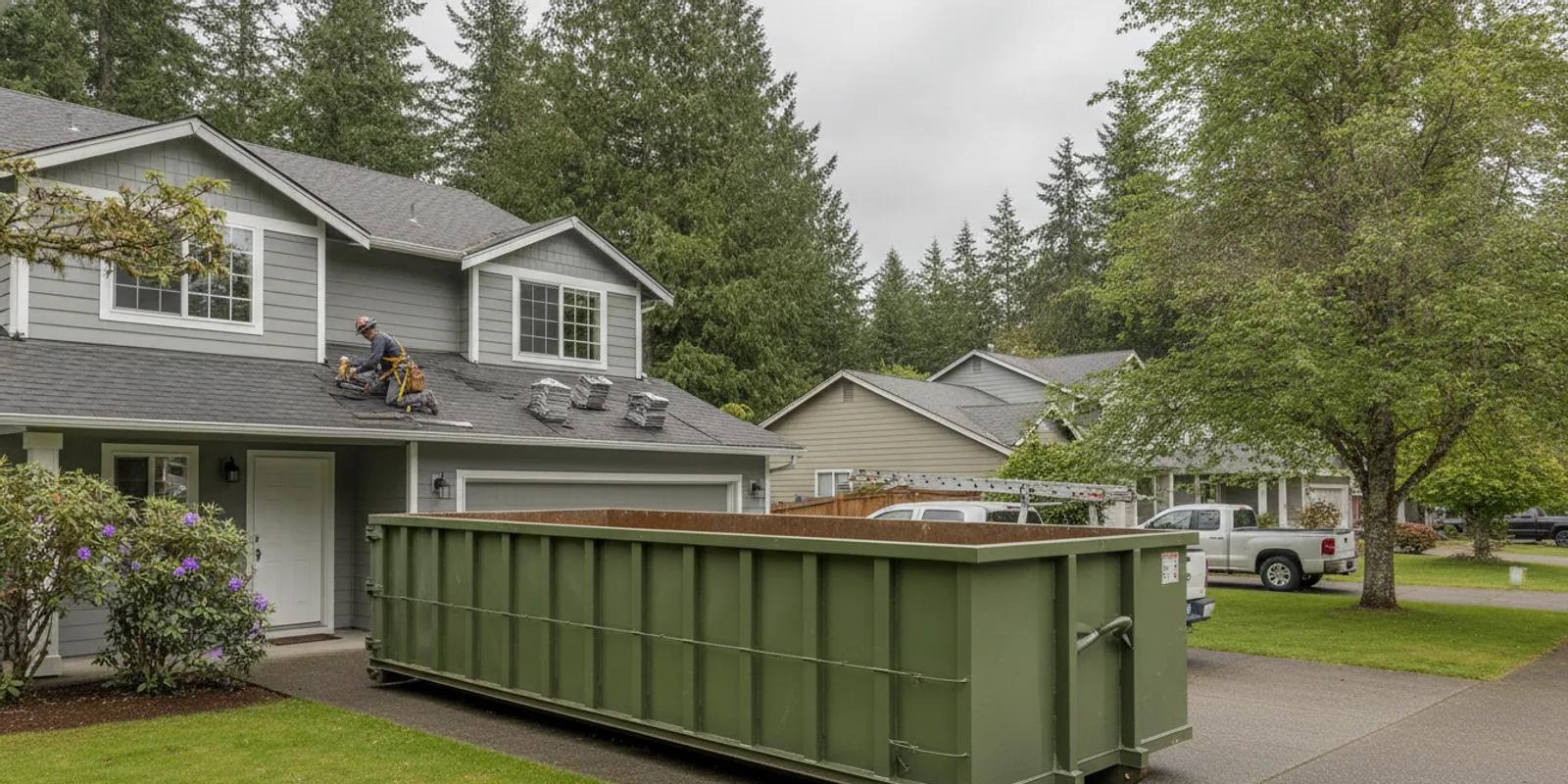
A roof replacement can create a large, concentrated pile of old roofing material in a short time. A roof tear-off dumpster rental gives you a single place to collect that debris while keeping the work area more organized. For a project in King County or Pierce County, the right choice depends on what is coming off the roof, how much material there is, and where a container can safely sit.
Contact Get Gawn to plan your roof tear-off rental
Which Get Gawn dumpster should you consider for roofing debris?
Get Gawn offers three container options: a 7-yard Rock & Dirt Box, a 15-yard dumpster, and a 22-yard dumpster. For hand-loaded roofing work, the 15- and 22-yard options are the relevant starting points. The 7-yard box is intended for heavy materials such as concrete, dirt, rock and gravel, brick and block, asphalt, and stripped sod. It is not the general roofing-debris choice described here.
Between the 15- and 22-yard dumpsters, consider the amount of material rather than choosing by roof area alone. The 15-yard container is 14 feet long with 5-foot sides. The 22-yard container is 16 feet long with 6-foot sides. A larger roof, multiple layers, or added tear-off material may point toward more space, but roof size by itself does not tell you exactly how much room debris will occupy.
| Option | Best fit to discuss | Key distinction |
|---|---|---|
| 7-yard Rock & Dirt Box | Heavy materials such as concrete, dirt, rock, brick, asphalt, and stripped sod | Lowboy container for the approved heavy-material uses; not the general roofing-debris option |
| 15-yard dumpster | Hand-loaded roofing work and other renovation debris when the expected volume fits | 14 feet long with 5-foot sides |
| 22-yard dumpster | Hand-loaded roofing work when a larger container is more appropriate for the expected volume | 16 feet long with 6-foot sides |
These are starting points for a conversation, not a promise that a particular roof will fit a particular container. If a project includes materials outside the normal roofing tear-off debris, describe each material before booking. For more detail about the 15-yard dumpster, 22-yard dumpster, and 7-yard Rock & Dirt Box, review the relevant option pages and confirm which one suits your plan.
How can you estimate the space a roof tear-off will take?
Start with the job details your roofer can provide. You do not need to calculate an exact debris volume on your own, but a few practical details make a size discussion more useful:
- Roof area and shape: Share the approximate area or the roofer's description of the roof. A complex roof can involve more work and debris handling than a simple roof with a similar footprint.
- Number of existing layers: If the crew expects to remove more than one layer, mention that. Multiple layers mean more material to collect.
- What is being removed: Tell Get Gawn whether the plan includes only roofing material or also other hand-loaded renovation debris. Do not assume that every material from the job can go in the same container.
- Whether sheathing or other parts are included: A roof replacement may involve more than the outer roofing layer. Ask your roofer what is actually being removed, then share that list when discussing the container.
- Work pace and collection plan: Ask the roofing crew how debris will be brought down and loaded. The container choice should match the project plan, not only the roof's dimensions.
A common planning mistake is to select a dumpster based only on the home's floor area or the number of roofing squares. Those numbers can help describe a roof, but they do not independently answer how much space the collected waste will take. Layers, tear-off scope, material type, and how the crew loads the debris all matter. Have your roofer explain the expected removal and use those details to ask about the 15- or 22-yard option.
Get Gawn's approved guidance is to hand-load these containers. Do not plan on loading the container with machinery. Arrange the work so the crew can safely carry debris to the dumpster and load it according to the agreed plan. If your contractor has an unusual loading method or expects bulky material, explain that before scheduling so the setup can be discussed.
What should you confirm about roofing materials?
Be specific about what will go into the container. Roofing jobs can involve the material removed from the roof as well as underlayment, flashing, wood, packaging, or other project waste. Do not treat a general description such as “roof debris” as confirmation that every item is accepted. Share the planned contents and ask Get Gawn to confirm the appropriate option before booking.
Get Gawn positions the 15- and 22-yard dumpsters for general non-hazardous debris, including roofing work. The 7-yard Rock & Dirt Box is for the listed heavy materials, not a catch-all container for a roof replacement. Keep the distinction clear when the same job also includes concrete, dirt, rock, brick, asphalt, or sod: describe those materials separately and ask which container or arrangement is appropriate. Do not put hazardous waste in a container; Get Gawn does not offer hazardous-waste acceptance.
For a project that also includes earth or sod work, the guide to where to dump dirt and sod explains the relevant material distinction. If you are unsure whether an item from the roof is acceptable, pause and ask before it is loaded. A brief check before delivery is easier than trying to sort out an unapproved item after the container is in use.
Where should the dumpster be placed?
Think through placement before delivery day. The driver needs a practical approach and a clear area where the roll-off can be set down. Check the proposed spot for parked vehicles, low branches, overhead lines, gates, and other obstacles. Make sure the roofing crew can reach the container without blocking a required entrance or creating an unsafe route through the work area.
Consider the surface, too. Talk through whether the container will sit on a driveway or another part of the property, and let Get Gawn know if surface protection is a concern. Driveway-safe placement and property care are part of the service guidance, but the site still needs to be assessed for the specific approach and placement. You can ask about driveway protection when planning the drop-off.
Some 7-, 15-, and 22-yard containers may fit locations where a full-size roll-off truck cannot, such as an alley, parking garage, behind a building, or a dead-end driveway. That is a possibility, not a guarantee. Describe the approach, turning room, access restrictions, and intended placement when you contact Get Gawn. The team can discuss whether the site appears workable before scheduling; do not assume a tight space will be accessible without that conversation.
If the project is in a neighborhood with limited parking or shared access, coordinate with the roofer and property owner ahead of time. Decide who will keep the placement area clear and how workers will move debris from the work zone. For additional location information, see Get Gawn's service areas and confirm that your job site is within its coverage in King County or Pierce County.
What pricing details should you clarify before delivery?
Get Gawn emphasizes clear upfront rates and no hidden fees or surprise overage charges. Even with clear pricing, it is useful to make sure you understand how the plan applies to your particular project before confirming. Describe the intended contents, proposed container, and job address, then ask what the quoted rental covers and whether any part of your request needs a separate confirmation.
Do not rely on a price or rental detail intended for a different container or material mix. If the roofing project also includes debris from another renovation task, tell Get Gawn about that before you book. The 7-yard Rock & Dirt Box has a distinct purpose from the 15- and 22-yard dumpsters, and an accurate material list helps the company discuss an appropriate option. Ask directly about anything you do not understand rather than estimating fees or assuming that a different job's arrangement applies.
Before you finish the booking conversation, confirm the container size, delivery location, schedule, material guidance, and pickup plan. If the roofer later expands the scope or the property access changes, contact Get Gawn to review the arrangement. Confirming important details with the company is more reliable than making a decision from a general online description alone. You can also review the Get Gawn frequently asked questions and follow up about any project-specific point.
How do timing and pickup fit a roofing schedule?
Coordinate delivery and pickup with the roofer before the work begins. Ask when tear-off is expected, how long debris collection may take, and when the container can be removed without disrupting the next work step. If the crew's schedule changes, contact Get Gawn rather than assuming the original pickup timing will automatically suit the new plan.
Same-day and next-day delivery may be available; same-day delivery is by phone request. Availability depends on scheduling, so do not treat a requested date as confirmed until you have spoken with Get Gawn. The company also identifies same-day and next-day pickup as a service option where available. Ask about the timing that fits the job and confirm the plan directly.
Get Gawn serves residential and commercial customers in King County and Pierce County. If you are planning a roof replacement in one of those areas, the Ravensdale service page or the Maple Valley service page can help you explore local service information. For a project elsewhere in the two-county area, use the service-area list or contact the team with the job address.
How can you keep the rental plan straightforward?
Before requesting a container, gather the information that can prevent avoidable changes:
- Describe the project: Identify it as a roof tear-off and explain whether the work is residential or commercial.
- Ask the roofer what is being removed: Note the number of layers if known, and list any additional material beyond the roofing debris.
- Discuss container size: Compare the 15- and 22-yard options based on the expected scope. Mention if the job includes any of the materials associated with the 7-yard Rock & Dirt Box, rather than assuming all debris goes together.
- Explain access and placement: Share the address, intended drop-off location, approach, and any tight turns or access limits. Ask about surface protection if needed.
- Coordinate dates: Request the delivery timing you need and agree on a pickup plan with Get Gawn and the roofing crew.
- Confirm the details: Review the container, contents, placement, and schedule with Get Gawn before the work starts.
For broader background on managing construction and demolition materials, the U.S. Environmental Protection Agency provides information on its official website. Use that as general information, not as a decision about which materials a particular rental provider accepts. For the actual contents of your Get Gawn rental, confirm directly with the company.
What should the roofer and property owner agree on?
A dumpster is only one part of a roof replacement plan. Before delivery, make sure the person arranging the rental and the roofing crew have the same understanding of where the container will sit, what waste is expected, and who will coordinate if the schedule changes. This is especially useful when the homeowner will not be on site during the work or when the project is at a commercial property with shared access.
Ask the roofer to explain how debris will travel from the roof to the container and who will keep the drop-off area clear. The approved guidance for Get Gawn containers is hand loading; do not plan for machinery to load them. The route should work for the crew without cutting across an area that needs to remain open to residents, customers, or other contractors. If the placement spot is near a door, parking area, or driveway entrance, agree in advance on how people and vehicles will move around it.
Confirm who will contact Get Gawn if the crew finds additional layers, discovers that the work includes more material than expected, or needs a change to the pickup plan. A quick conversation can prevent the homeowner, contractor, and rental provider from working from different assumptions. It is also a good time to clarify the contents. Have the roofer identify any non-roofing debris and ask whether it belongs in the same container before loading it.
For a commercial job, include the property manager or site contact in the placement discussion. Check that the proposed spot and delivery approach do not conflict with normal building access or the project's own work zones. For a home, coordinate with everyone who uses the driveway or yard, and move vehicles or other obstructions before the agreed delivery window. In either setting, share any gate, surface, overhead, or turning constraints with Get Gawn as early as possible.
It can help to keep a short written plan with the rental details, accepted contents confirmed with Get Gawn, delivery date, pickup request process, and the name of the person handling communication. That note does not replace direct confirmation with the company, but it gives the crew and property contact one reference point. If the scope changes, update the plan rather than relying on an earlier estimate or assumption.
When a roofing job is part of a broader renovation, make a simple list of what is coming from each work area. For example, separate the roof tear-off description from any planned concrete, dirt, brick, or sod work. Those materials have different container guidance, so describing them separately gives Get Gawn a chance to advise you before delivery. Do not combine materials based only on convenience or assume one container is appropriate for everything on site.
Discuss your roofing project with Get Gawn
Frequently Asked Questions
Is a 7-yard Rock & Dirt Box the right choice for roof shingles?
Get Gawn's 7-yard Rock & Dirt Box is intended for heavy materials such as concrete, dirt, rock and gravel, brick and block, asphalt, and stripped sod. For hand-loaded roofing work, discuss the 15- or 22-yard dumpster instead. If your project has an unusual material mix, describe it and ask Get Gawn to confirm the right arrangement.
Should I choose a 15-yard or 22-yard dumpster?
The answer depends on the tear-off scope and the amount of debris expected. The 15-yard dumpster is 14 feet long with 5-foot sides; the 22-yard dumpster is 16 feet long with 6-foot sides. Ask your roofer what is being removed, including whether there are multiple layers or additional material, then review those details with Get Gawn.
Can the container go in a narrow driveway or behind a building?
It may be possible in some locations, but access is not guaranteed. Describe the entrance, route, clearances, turning area, and placement spot to Get Gawn before scheduling. The team can discuss whether the approach can work for your site.
Can I put hazardous waste in the dumpster?
No. The 15- and 22-yard dumpsters are for general non-hazardous debris, and Get Gawn does not offer hazardous-waste acceptance. Ask the company about any material you are uncertain about before placing it in the container.
Ready to plan your roof tear-off?
Once you know the removal scope, likely contents, desired placement, and project dates, share those details with Get Gawn. For a roof tear-off in King County or Pierce County, ask about the 15- and 22-yard options, confirm the materials and site access, and agree on delivery and pickup timing before the crew starts.
A little planning helps your roofing crew keep debris collection organized and gives you a clearer path from tear-off to cleanup.
Frequently Asked Questions
What is the best dumpster for a construction project?
The best choice depends on material type, project volume, and placement. Use the 7-yard Rock & Dirt Box for an approved, dedicated heavy-material load. Use the 15-yard dumpster for many focused projects with hand-loaded general non-hazardous debris. Use the 22-yard dumpster when a larger general non-hazardous project needs more room. Confirm the project details with Get Gawn before booking.
Can I put concrete, dirt, or brick in a regular dumpster?
Keep approved concrete, dirt, rock and gravel, brick and block, asphalt, and stripped sod in the dedicated 7-yard Rock & Dirt Box when accepted by Get Gawn. The 15-yard and 22-yard dumpsters are intended for hand-loaded general non-hazardous debris. Keep heavy materials free of trash, wood, drywall, metal fixtures, and mixed household debris.
What should I do with hazardous or uncertain material?
Do not place hazardous or regulated material in a general-purpose dumpster. Set uncertain items aside and contact Get Gawn with the material description before loading. Physical fit does not by itself confirm acceptance.
How long can I rent a Get Gawn dumpster?
Rental duration and extension terms should be confirmed for the container and booking you choose. Ask Get Gawn for the current terms before scheduling, especially when a construction phase may run longer than expected.
How should I prepare the delivery area?
Clear the delivery route, share the full address and access details, and tell Get Gawn about gates, slopes, narrow approaches, overhead concerns, or surface conditions before scheduling.
Choose the Container That Matches the Work
Compare the 7-yard Rock & Dirt Box, 15-yard dumpster, and 22-yard dumpster, then contact Get Gawn with the project details. Review the service area before booking if the delivery location is unusual.