Dumpster Rental for Junk Removal: DIY Cleanout Guide
Plan a dumpster rental for junk removal with cleanout steps, material guidance, and delivery tips for King and Pierce County. Contact Get Gawn to get started.
A self-managed cleanout is easier to control when you can sort items room by room instead of rushing everything to the curb. A dumpster rental for junk removal gives you a container on site while you handle the sorting and loading. Full-service junk removal typically includes a crew to do that labor for you. The better choice depends on your available help, project pace, access, and material mix. For broader planning, review our dumpster choices for cleanout debris.
Contact Get Gawn to plan your cleanout
Dumpster rental for junk removal can be a practical fit for homeowners, property managers, and contractors in King County and Pierce County who want to manage the work themselves. Get Gawn offers 7-, 15-, and 22-yard containers, with the right choice depending on whether your project involves heavy material or general non-hazardous debris.
Before booking, compare the labor you can safely provide with the convenience of having a crew handle removal. Then consider whether a container can fit your site and support the way you plan to work.
Is dumpster rental for junk removal right for your project?
The main difference is who does the work. With a roll-off dumpster, you decide what goes, sort it, and load the container over the rental period. A full-service junk removal crew typically does the lifting and hauling, which can be useful when you have a few bulky items or do not want to handle loading.
| Consideration | Self-managed dumpster rental | Full-service junk removal |
|---|---|---|
| Who loads | You or your helpers sort and load the container. | A removal crew generally carries and hauls the items. |
| Project pace | Useful when debris builds up over several work sessions. | Useful when you want the lifting and hauling completed in one arranged visit. |
| Best fit | Garage, estate, renovation, property-turnover, or whole-house cleanouts you can safely manage. | A small number of bulky items or a project where labor is the main constraint. |
| Questions to ask | Confirm container size, accepted materials, placement, delivery, pickup, and rental timing. | Confirm what labor, hauling, sorting, and disposal are included. |
Choose a dumpster rental when you can safely do the sorting and loading, expect debris to build up over several days, or are cleaning multiple rooms, a garage, or a renovation area. Consider full-service removal when you need a crew to carry items away or cannot manage the lifting yourself. The right choice depends on the full scope of work, not just the visible size of the pile.
For example, a homeowner clearing a garage over a weekend may prefer a container on site because items can be sorted in several sessions. Someone with one old sofa and no time to move it may find a removal crew more convenient. A whole-house cleanout can fit either model, depending on the household's available help and schedule.
Write down the tasks you would otherwise do yourself. Include carrying items from upper floors, separating donations, dismantling suitable furniture, loading, and sweeping. Then ask the full-service provider whether those tasks are included, and ask the dumpster provider about material rules and rental details. For related project-planning guidance, read Get Gawn's construction and cleanout dumpster guide.
What can you load into a dumpster rental for junk removal?
Roll-off dumpsters are useful for a steady stream of non-hazardous debris from cleanouts, renovations, and repairs. Common examples may include unwanted household contents, broken furniture, boxes, flooring, roofing debris, and general remodeling waste, subject to the container and material guidelines. A dumpster is especially practical when you want to work through one area at a time instead of putting everything on the curb at once.
Get Gawn offers three container sizes. The 7-yard Rock & Dirt Box is intended for heavy materials. The 15- and 22-yard dumpsters are general-purpose options for hand-loaded, non-hazardous cleanout and remodeling debris. Confirm the material and project fit before delivery rather than treating the sizes as interchangeable.
- Use the 7-yard Rock & Dirt Box for approved heavy materials such as concrete, dirt, rock and gravel, brick and block, asphalt, and stripped sod.
- Consider the 15- or 22-yard option for general debris from hand-loaded household cleanouts, remodeling, flooring, roofing, kitchens, bathrooms, decks, and similar work.
- Ask about anything unusual before it goes into the container. Do not rely on a general assumption that every household item is accepted.
Do not assume that paint, chemicals, batteries, fuel, or other potentially hazardous household products can go in a dumpster. The U.S. Environmental Protection Agency household hazardous-waste guidance recommends using collection programs and reading product labels for disposal directions. Keep questionable items separate and confirm the appropriate local option before loading.
When sorting, create a separate holding area for items that may be donated, recycled, or need special disposal. Keep reusable furniture and household goods dry and accessible until you confirm a recipient or drop-off plan. If an item has a battery, liquid, pressurized container, or chemical label, pause and ask about disposal rather than placing it in general debris. You can also review Get Gawn's answers about how dumpster rental works.
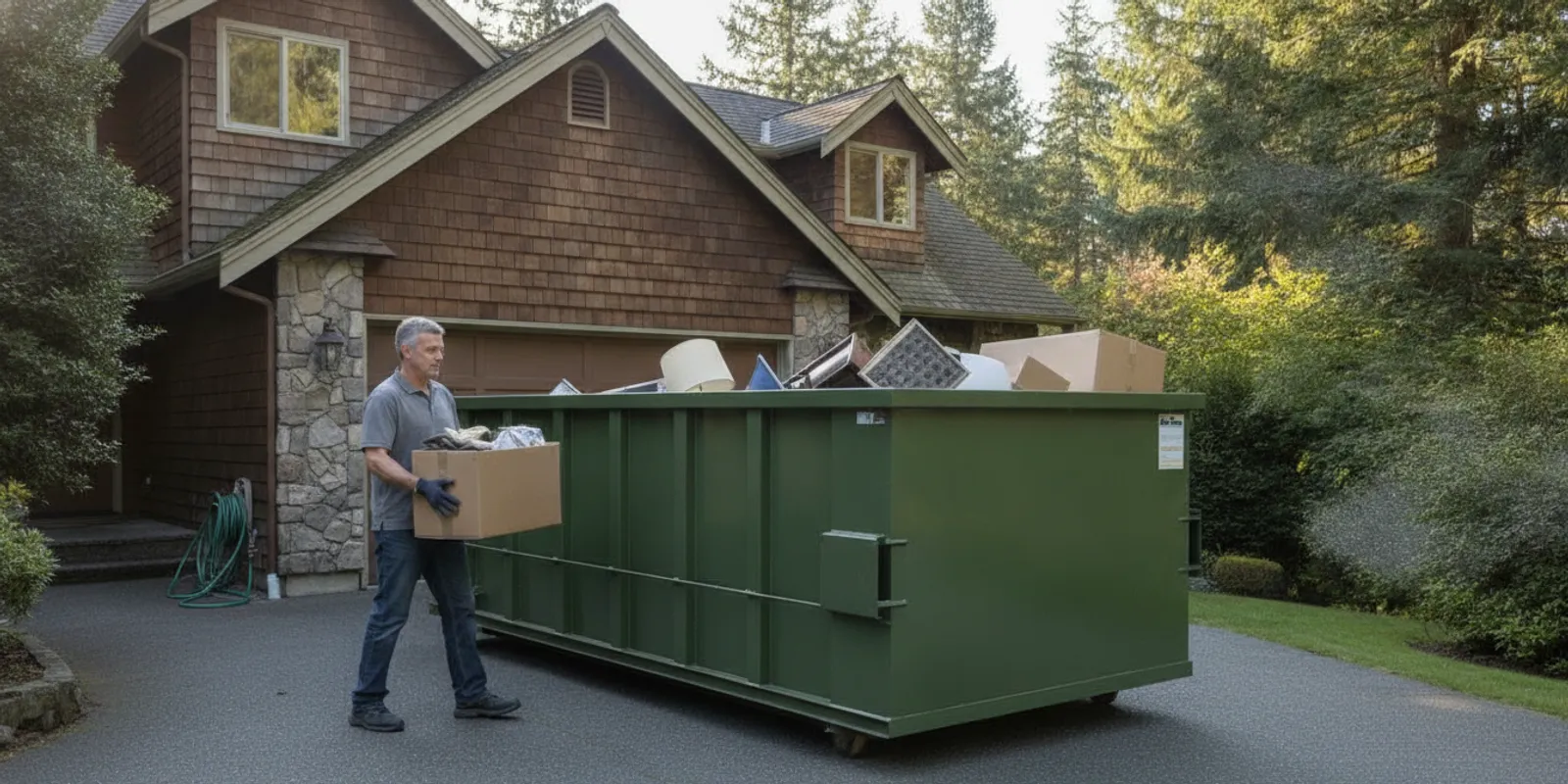
How do you plan a dumpster rental for junk removal cleanout?
A simple plan helps you avoid loading items you meant to keep or filling the container before the most important rooms are done. Work in stages and decide where each category goes before delivery.
- Walk the property first. List the rooms, garage, shed, or work areas you intend to clear. Estimate the types of items and debris, not only the number of bags.
- Sort into clear groups. Separate keep, donate, recycle, and discard items. Set aside anything requiring special disposal, and do not mix questionable materials into general debris.
- Choose a size based on the material and project. Heavy material belongs in the 7-yard Rock & Dirt Box. General non-hazardous household or remodeling debris may fit a 15- or 22-yard dumpster. Describe the project to Get Gawn so the team can help confirm the fit.
- Plan the work sequence. Clear the areas farthest from the dumpster first, then work toward the loading point. Break down suitable bulky items and distribute material evenly without exceeding the fill line or loading rules.
- Prepare the delivery location. Choose a stable, accessible spot and remove vehicles or obstacles from the approach. Describe narrow access, an alley, a parking garage, a dead-end driveway, or a location behind a building when you contact the rental provider. A container may fit where a full-size roll-off truck cannot, but site fit is not guaranteed.
- Confirm the details before scheduling. Ask about accepted materials, container placement, delivery, pickup, and the rental timing that fits your project.
Turn the walkthrough into a room-by-room checklist. Mark which rooms contain the largest objects, which areas can be cleared first, and what must remain accessible. If the cleanout involves an estate or shared household, label keep items and agree on who can approve discards before anything is loaded.
Estimate labor realistically. Count how many people can safely help and how many hours they can give. Stairs, long carries, and awkward furniture can slow the work. Reserve heavy lifting for capable helpers, use safe lifting practices, and stop if an object is unstable or too heavy to control.
For loading, begin with larger stable pieces and fill gaps with smaller items. Keep the load level and within the provider's instructions. Avoid loose debris that can blow away, and never climb onto an unstable pile to compress it. Keep pathways to the container clear so helpers are not stepping around tools, bags, or donation items.
Get Gawn's 15-yard dumpster and 22-yard dumpster pages provide product-specific context for general debris. Use the material mix, project scope, and available loading help to guide the conversation before delivery.
How long do you get to keep the dumpster during a cleanout?
Get Gawn's stated rental period is 7 days. That gives you time to sort and load in stages rather than finishing the whole cleanout in one day. If you expect the project to take longer, ask about timing and extension arrangements before booking. Do not assume the container can remain on site indefinitely.
Map the week to specific tasks instead of treating all seven days as interchangeable. You might use the first day to stage donations and clear a path. Use the next work sessions for the garage and storage areas, followed by a later session for furniture and remaining rooms. Leave time near the end to check what is still in the house, ensure the container is loaded according to instructions, and communicate the pickup request.
When planning the week, schedule the most demanding work early and leave time for a final sweep. If the dumpster fills sooner than expected, stop loading and contact the provider about the next step. Do not pile debris above the rim or leave material beside the container unless you have confirmed it can be collected.
What should you confirm before booking a cleanout dumpster?
A short conversation can surface access or material questions before a truck is dispatched. Be ready to share:
- The property address and a clear description of the truck's approach and placement area.
- Whether the project is mainly household clutter, renovation debris, or heavy material such as concrete or soil.
- Which rooms or outdoor areas you are clearing and whether the work will be hand-loaded by you or your helpers.
- Your preferred delivery timing, pickup timing, and whether you may need additional time.
- Any unusual or potentially restricted items so the provider can clarify handling before they are loaded.
It also helps to mention overhead branches or wires, a slope, a narrow gate, parked cars, or a surface that could be affected by equipment. Describe the full route from the street to the proposed placement area, not only the space where the container would sit. Get Gawn's containers may fit locations where a full-size roll-off truck cannot, including some alleys, parking garages, spaces behind buildings, and dead-end driveways. That possibility depends on the site and approach, so share the details and ask the team to confirm feasibility before scheduling.
Ask how doorstep placement works and whether you should clear the driveway or mark a preferred location. If you are concerned about the placement surface, bring that up in advance and review available options, including driveway protection. Keep the delivery area free of vehicles and movable obstacles during the agreed window.
Contact Get Gawn before booking to discuss your container, materials, placement, and timing.
Is dumpster rental available for cleanouts in King County and Pierce County?
Get Gawn serves residential and commercial customers in King County and Pierce County, Washington. The company is based in Ravensdale and serves communities across the region. Availability and site access can depend on the project address, so confirm your location and delivery approach before scheduling. Visit the service areas page or contact the team with your address.
When you reach out, explain whether your cleanout is a one-day push or a project spread across several days. A clear description of the rooms, approximate debris mix, access, and desired timing gives the team a useful starting point for confirming the right container and delivery plan. If the address is near the edge of King County or Pierce County, provide the full address rather than relying on a city name alone.
For a cleanout, a dumpster rental is a practical option when you want to control the pace and handle sorting and loading yourself. If you want a crew to do the lifting, compare full-service removal instead. Choose the option that fits your time, material, and access needs, then confirm the details before work begins.
Frequently Asked Questions
Is a dumpster rental for junk removal different from full-service junk removal?
Yes. A dumpster rental is a self-managed option: Get Gawn delivers the container, and you sort and load your own cleanout debris. Full-service junk removal uses a crew to remove items for you. Choose the rental approach when you want control over the sorting and loading work.
What size dumpster is best for a cleanout?
It depends on the material and the scope of the project. Get Gawn offers 7-, 15-, and 22-yard containers. The 7-yard Rock & Dirt Box is intended for heavy materials, while the 15- and 22-yard containers are general-purpose options for hand-loaded cleanout debris. Confirm the material and project fit before delivery.
What can I put in a cleanout dumpster?
Confirm acceptable materials with Get Gawn before loading. Common cleanout debris may include items from garage, estate, renovation, or property turnover projects, but restricted and hazardous materials should not be assumed acceptable. The EPA recommends using household hazardous-waste collection programs for products such as paints, cleaners, oils, batteries, and pesticides: EPA household hazardous-waste guidance.
How do I prepare for dumpster delivery?
Choose a practical placement area, keep the approach clear, and tell Get Gawn about the site before scheduling. Confirm the container size, accepted materials, placement, delivery, and pickup details with the team. Doorstep delivery supports self-managed cleanouts in King County and Pierce County, but site fit should be confirmed in advance.
Contact Get Gawn to Plan Your Cleanout
Contact Get Gawn to confirm the right dumpster, acceptable materials, placement, delivery, and pickup for your project. A quick conversation can help you choose a practical container for your cleanout and avoid surprises on delivery day. Reach out to the Get Gawn team or call (425) 620-6513.